
Concrete pumping is increasingly commonplace.
Concrete pumping has become standard practice across Australia and New Zealand, particularly as sites become tighter, structures taller, and schedules less forgiving.
- Long horizontal distances
- Up multiple storeys
- Through complex line layouts
Concreters know that pumping performance can make or break a pour.
Friction – the enemy.
When concrete needs to travel a long way through a pump line, friction becomes the enemy.
Every metre of pipe, every bend, every reducer, and every hose adds resistance. As pressure builds, the mix is forced harder against the pipe wall, increasing the risk of separation, blockage or sudden loss of flow.
Continuous flow is critical to placement quality and site safety.
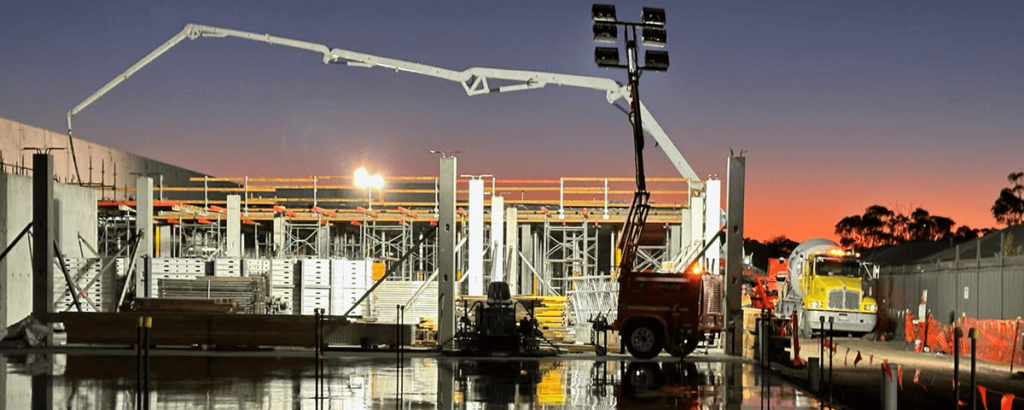
One of the most common pain points is inconsistent flow. A mix that looks workable at the hopper can stiffen partway through the line, particularly when SCMs are in use or when moisture is limited. Fluctuating pressure can cause the concrete to surge or stall, leading to uneven placement and cold joints. In extreme cases, blockages can stop the pour entirely, resulting in lost time, wasted material and costly cleanouts.
|
Segregation is another challenge.
Under high pump pressures, poorly stabilised mixes can bleed or separate. Cement paste may move ahead of the aggregate. This increases the risk of blockage and can also compromise surface quality once the concrete is placed. Concreters may struggle to finish slabs evenly.
Site challenges are increasing.
These pumping challenges are often amplified on modern projects. Longer lines, higher buildings, tighter access and hotter weather all reduce the margin for error.
Pump selection, pipe layout, and operator skill remain essential, but the behaviour of the mix inside the line is just as important. The mix should flow under pressure but stay cohesive at rest. This is far more forgiving for placement and finishing.
Traditional approach.
Traditionally, crews have relied on additional water or a higher slump to keep concrete moving. However, adding water can reduce strength, increase shrinkage and negatively affect durability. In many cases, it simply shifts the problem further down the line rather than solving it.
This is where a purpose-designed pumpability enhancer comes into play.
CONQOR P10 has been developed to improve the behaviour of concrete during pumping without compromising performance at placement. It is a high-performance admixture formulated to enhance flow, pumpability, and placement by modifying the mix’s rheology.
Rather than making the concrete “looser”, CONQOR P10 helps the mix move more easily under pressure while remaining stable and cohesive once placed.
|
Practical benefits.
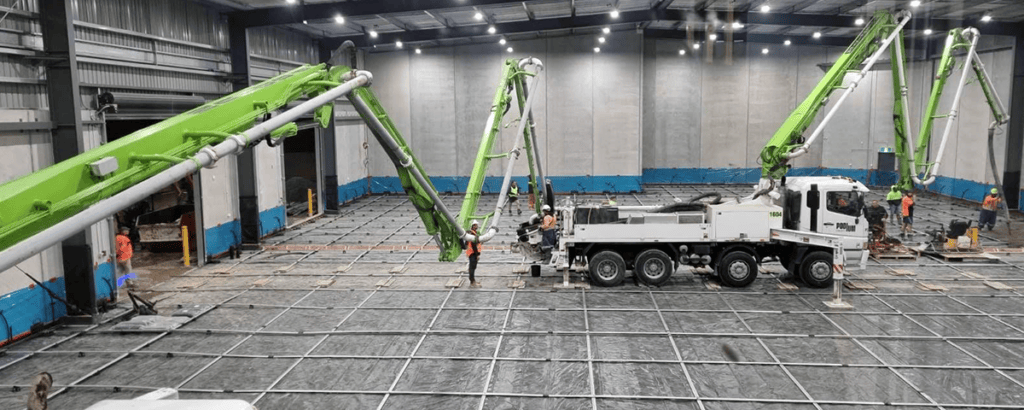
In practical terms, this means reduced friction in the line, smoother pressure profiles and a lower risk of blockage on long or high lifts. The mix flows when pumped, vibrated or screeded, then holds together, supporting consistent surface closing and easier finishing.
Compatible and easy to use.
CONQOR P10 is compatible with most supplementary cementitious materials and admixture systems, making it well-suited to modern concrete designs. For concreters working with pumps day in, day out, it offers a way to reduce pumping headaches, protect finish quality and keep pours moving to plan, even when the line gets long.
Faced with concrete pumping challenges? We’d like to hear from you!
Are you involved in mix design? Try our on-demand webinar, “Optimising for SCMs”.