Hospitals, healthcare facilities and aged care centres are expected to serve their communities for decades. Yet many flooring failures, maintenance issues and durability challenges can often be traced back to decisions made long before the building opens, and even before the first concrete is poured.
Growing Healthcare Needs
Across Australia and New Zealand, healthcare infrastructure continues to expand to meet the needs of growing and ageing populations. Designers, engineers and project teams face increasing pressure to deliver facilities that are durable, efficient to maintain and capable of supporting critical services throughout their design life.
When discussing long-term building performance, attention often focuses on finishes, equipment and operational systems. However, one of the most important decisions lies beneath the surface: the concrete slab itself.
The Hidden Moisture Risk Beneath Healthcare Flooring
Floor coverings play a vital role in healthcare environments. They contribute to hygiene, comfort, maintenance efficiency and the overall user experience. However, floor coverings can only perform as well as the substrate beneath them.
- PROVEN IN PRACTICE: Rosewood Aged Care, South Perth
Moisture within concrete slabs remains one of the most common causes of flooring-related problems.
Beyond performance concerns, excessive slab moisture can create programme risk during construction. Flooring contractors, adhesive suppliers and project teams may face delays when moisture conditions are not aligned with specification requirements, placing pressure on construction schedules and handover milestones.
Moisture management is not solely about the concrete itself. Flooring systems involve interactions between the slab, adhesives, floor coverings, waterproofing systems and supplier requirements. Ensuring these elements are compatible from the outset can help project teams avoid costly remedial work later.
Breakdown and Failure
Excess moisture can contribute to adhesive breakdown, bubbling, blistering and delamination. These issues often emerge after occupancy, when repairs become significantly more disruptive and expensive.
For hospitals operating around the clock, flooring failures can impact access to critical areas, disrupt staff and patients, and create unplanned maintenance costs. In many cases, the root cause remains hidden beneath the finished floor.
 |
| New Maitland Hospital – completed 2022. MARKHAM applied concrete moisture control and sealing treatments. |
Hygiene and Contamination in Healthcare Environments
Healthcare facilities face additional challenges beyond moisture management.
Floor systems may be exposed to disinfectants, cleaning agents, bodily fluids, and frequent wet-cleaning cycles. Over time, these conditions can place additional demands on both the floor covering and the concrete beneath it.
In a hospital environment, replacing a failed floor covering is rarely a simple maintenance task. Access restrictions, infection-control requirements and the need to keep critical areas operational can significantly increase the cost and complexity of remediation.
- REAL-WORLD RESULTS: Cardinia Aged Care
For this reason, some project teams are evaluating concrete treatment approaches that address moisture movement within the concrete itself, rather than relying solely on flooring-stage interventions.
Rather than focusing solely on what sits on top of the slab, designers are increasingly evaluating how to protect the slab from the outset. Addressing moisture movement and ingress pathways early can help improve the resilience of the entire flooring system.
Whole-of-Life Costs: Why Earlier Decisions Matter
The greatest opportunity to influence performance outcomes typically exists during design development and specification, before tendering and procurement decisions lock in key requirements.
Many flooring-related decisions are made late in the construction process, often when floor coverings are about to be installed. By that stage, options can be limited.
Healthcare projects involve owners, designers, builders, flooring contractors, adhesive suppliers and waterproofing specialists. When moisture-management decisions are deferred until late in the project, responsibilities can become fragmented, and project teams may receive conflicting advice, making coordinated decision-making more difficult.
A Better Approach
An alternative approach is to consider moisture management, concrete durability and long-term performance requirements during design. Early planning creates opportunities to select systems that align with the building’s intended use and expected service life.
The result can be fewer construction complications, reduced future maintenance requirements and more predictable long-term outcomes for owners and operators.
Early planning also provides greater opportunity to establish testing requirements, quality-assurance pathways and documentation processes that support informed decision-making throughout the project lifecycle.
 |
| John Hunter Hospital, while under construction, 2023. MARKHAM applied concrete curing and sealing treatments. |
Designing for Decades of Operation
While flooring performance often drives the conversation, moisture-related decisions can also influence broader durability considerations, including waterproofing performance and long-term asset resilience.
At MARKHAM, we work with project teams focused not only on construction outcomes but also on how facilities will perform years into the future.
Our approach centres on enhancing concrete durability through technologies that support moisture control and long-term protection. The goal is to help reduce future risk while supporting the demanding performance requirements of modern healthcare facilities. The same principles can also benefit aged care and animal care environments, where moisture management and hygiene are equally important.
Not Just About Handover
Ultimately, the question is not whether a floor covering will perform on handover day. The more important question is whether the entire flooring system, including the concrete beneath it, will still be performing years down the track.
For healthcare facilities expected to remain operational for decades, that conversation should begin well before the first pour.
Designing a Healthcare Project Expected to Operate for 40+ Years?
Healthcare facilities are expected to support patient care for decades. The question is not whether the floor looks good at handover. The question is whether the concrete, flooring system and building will still be performing as intended years from now.
Talk to MARKHAM about practical ways to reduce moisture-related risks to flooring and support long-term concrete performance on your next project.
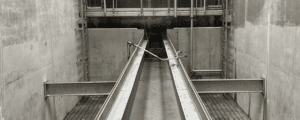
Article header image: Wonthaggi Hospital redevelopment under construction. MARKHAM provided concrete sealing works to several structural elements.
More on this topic: visit our on-demand webinar, “Hygiene and Anti-Contamination in Concrete Floor Slabs“.