Why does CONCRETE need CURING ASSISTANCE?
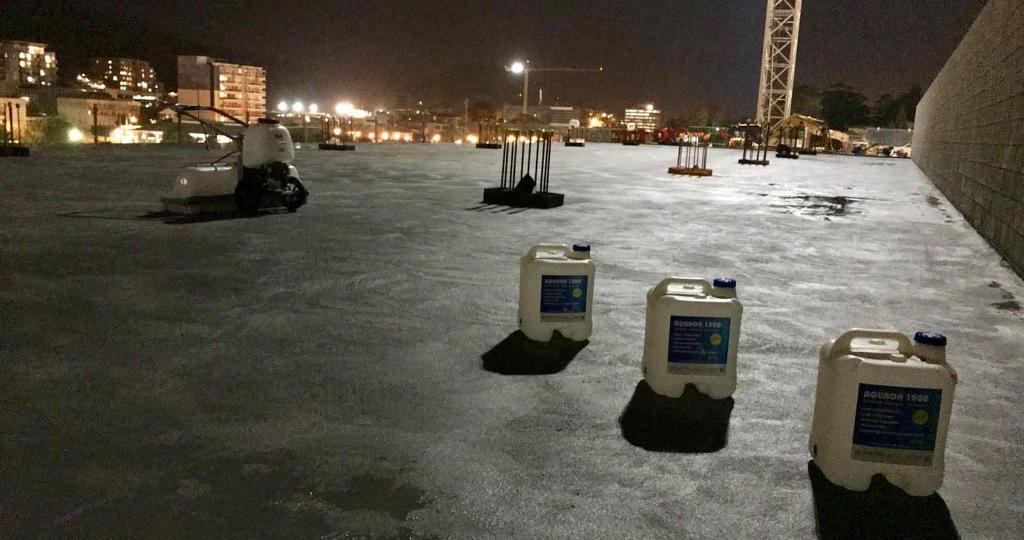
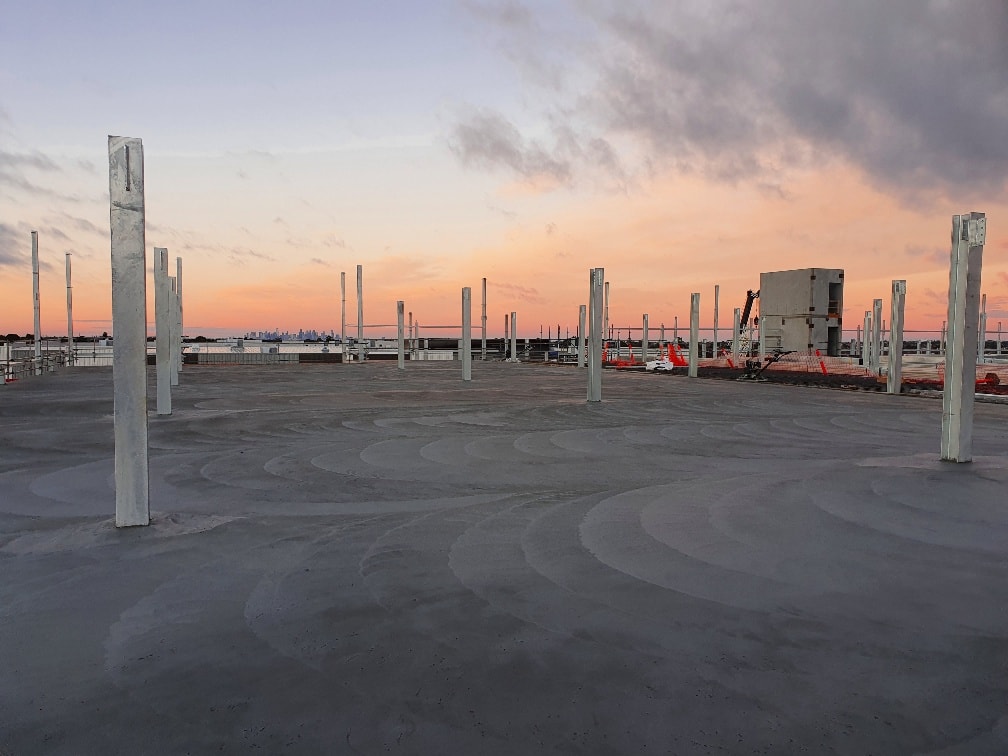
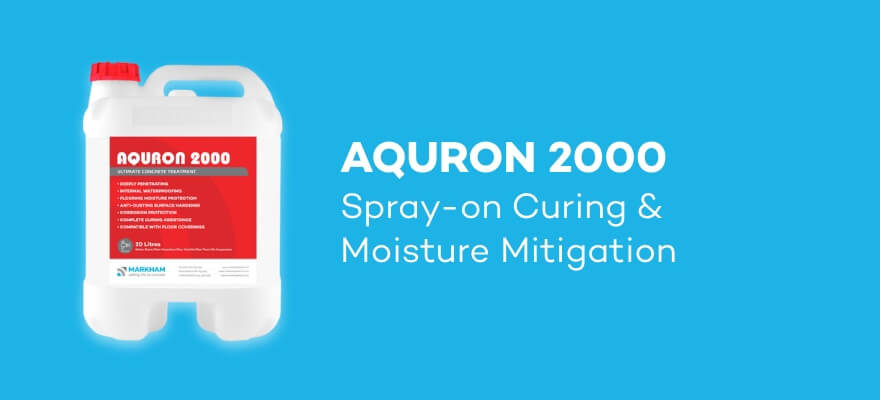
Structurually important to ensure the concrete reachs design strength for durability. Methods include AQURON 2000 Hydrogel, water ponding, or a curing film. Water ponding is generally impractical for most projects, and acrylic films must be removed later, adding extra costs. AQURON 2000 is the most practical and cost-effective solution for curing concrete that will have floorcoverings installed
Why concrete under floorcoverings in Health & Aged Care need protection?
The first relates to the moisture content of the slab. Moisture and vapour can rise out of the slab and causing bubbling and delamination of the flooring, or dissolve the adhesive.
The second challenge is longer term. The slab needs to be protected against contaminants such bio-fluids (urine, blood, etc) or chemicals. These fluids can enter the porosity of the slab, sometimes causing odours which cannot be removed; and in some cases causing degeneration of the concrete itself.
Why choose MARKHAM?
Markham helps reduce your project risk by engaging early in the design process and supporting through to production. We provide supply and application of spray-on treatments and admixture systems that enhance concrete durability, protecting and future-proofing your structures
UNDER CARPET & CARPET TILES:
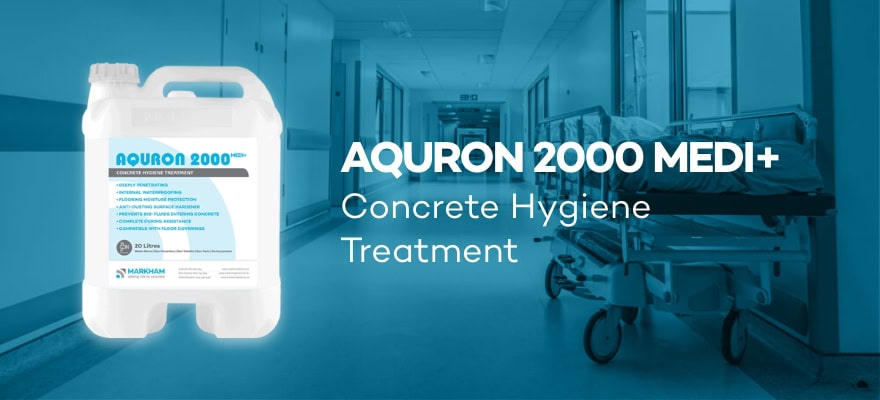
AQURON 2000 MEDI+ Proven & Guaranteed
AQURON 2000 MEDI+ immobilises moisture within concrete, and has been successfully used in Australasia to prevent moisture issues under floor coverings.
Choose AQURON 2000 MEDI+ to provide “curing assistance” and concrete moisture from the time the concrete as poured. As AQURON 2000 MEDI+ is inside the concrete there is no need to re-apply when changing floor coverings in years to come.
AQURON 2000 MEDI+ has been specifically designed to meet the needs of aged care and healthcare floors. In addition to providing moisture control, AQURON 2000 MEDI+ protects against bio-fluid and chemical ingress.
UNDER RESILIENT FLOORCOVERINGS:
FLOOR-TECT System compliant to AS1884:2021
This is a two step system of internal moisture control plus a surface primer.
The FLOOR-TECT system combines AQURON 2000 and FLOOREVERDRI primer to provide a fully AS1884:2021 compliant system where required.
Performance Guarantee – Supply & Installation Contracts
This is the full MARKHAM experience providing product supply, installation, QA and finally a project-specific warranty will be offered based on asset condition and extent of works. These performance warranties are typically a minimum of 15 years.