Responsible for a water treatment plant?
You’ll know the importance of keeping water moving safely and reliably through your facility. But how often do you think about what that water is doing to the concrete structures that contain it?
Concrete is widely used throughout water treatment infrastructure because of its strength, durability and long service life. However, water treatment environments often expose concrete to far more than moisture alone. Elevated contaminant levels can penetrate concrete over time, increasing the risk of deterioration and corrosion of reinforcement.
Yet not all water is equal.
While conventional water storage structures must contend with moisture and occasional chemical exposure, water treatment plants face a more demanding reality. The water moving through these facilities frequently contains elevated levels of contaminants such as dissolved salts, treatment chemicals and other aggressive substances that can accelerate concrete deterioration if left unchecked.
 |
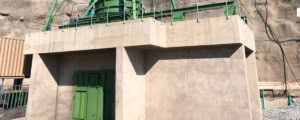
| At Witches Oak Water Treatment Works, MARKHAM treatments enhanced the durability and lifespan of multiple bund structures. |
Concrete deterioration is not simply a maintenance issue. It can drive up operating costs, disrupt plant operations, shorten asset life and increase long-term capital expenditure.
Why are water treatment plants particularly vulnerable?
Despite concrete’s innate durability, even high-quality concrete remains a porous material with a network of microscopic capillaries and voids. Over time, contaminants carried by water can penetrate these pathways.
In water treatment environments, concrete may be exposed to:
- Chlorides from source water or treatment processes
- Sulphates and other dissolved minerals
- Aggressive chemicals used for water treatment
- Carbon dioxide and other reactants
- Cycles of wetting and drying
- Contaminated groundwater surrounding below-ground structures
As these contaminants migrate into the concrete, they can initiate reactions that weaken the material or contribute to corrosion of embedded reinforcing steel.
In many treatment facilities, deterioration begins long before it becomes visible. By the time cracking or spalling appears, chlorides and other contaminants may already have been migrating through the concrete for years.
The real cost of deterioration
The visible signs of deterioration are often only part of the problem.
- CASE STUDY DOWNLOAD: Oswestry Water Treatment Works
Corrosion of reinforcing steel causes expansion within the concrete, generating internal stresses that lead to cracking and spalling. As cracks grow, they allow even more contaminants to enter, creating a cycle of ongoing degradation.
For water treatment operators, this can result in:
❌ Increased maintenance costs
❌ Operational downtime during repairs
❌ Reduced asset service life
❌ Greater risk of leakage and contamination issues
❌ Rising whole-of-life infrastructure costs
Given the scale and importance of treatment facilities, replacing major concrete assets is rarely an attractive option. As a result, many asset owners are shifting their focus towards proactive protection and long-term durability strategies.
Moving beyond reactive maintenance
Traditionally, concrete protection has relied heavily on surface-applied membranes and coatings. While these systems can provide a protective barrier, they often require ongoing inspection, maintenance and eventual replacement as they age or become damaged.
An alternative approach is to address deterioration within the concrete itself.
By reducing the movement of moisture and contaminants through the concrete matrix, it becomes possible to slow many of the processes that drive long-term deterioration. This is particularly valuable in water treatment plants where exposure conditions remain constant throughout the asset’s life.
The goal is not simply to repair damage after it occurs, but to create conditions that help preserve the concrete before significant deterioration develops.
Internal protection for long-term durability
This is where penetrating hydrogel treatments have gained increasing attention.
 |
| MARKHAM provided a retro-applied waterproofing treatment to the Horsley Connection 20 Chamber. |
Rather than forming a surface film, hydrogel technologies penetrate concrete and interact within its pore structure. By reducing the movement of moisture and water-borne contaminants through the concrete, these treatments can help protect the reinforcement zone and reduce the risk of corrosion-related deterioration.
For water treatment infrastructure, the potential benefits include:
✅ Contaminants are blocked
✅ The reinforcing steel is protected
✅ The concrete is more resistant to the aggressive environment
✅ Treatment is compatible with other remediation systems
✅ Minimal downtime
✅ Long-term protection without the need to reapply
Because the treatment becomes part of the concrete itself, there is no membrane layer to delaminate, blister or wear away over time.
Extending the life of critical infrastructure
Every year of additional service life gained from existing assets can represent significant savings in capital expenditure, reduced operational disruption and improved sustainability outcomes.
MARKHAM hydrogel treatments have been used on a wide range of durability-critical structures, including water storage facilities, marine infrastructure and other assets exposed to challenging moisture and contaminant conditions. These treatments form part of a proactive asset management strategy aimed at preserving concrete for the long term.
If you’re responsible for maintaining a water treatment facility, protecting concrete is about much more than avoiding repairs. It’s about safeguarding the critical infrastructure your community depends on every day.
MARKHAM focuses on concrete outcomes, not simply treatment application. When contamination and moisture are constant realities, proactive durability measures can make the difference between repeated repair cycles and decades of dependable performance.
Faced with these challenges in your WTW? Visit our dedicated page for the industry.
Protection strategies must be supported by project evidence and measurable performance. Every project is unique. To request a concrete durability review for your water treatment asset, get in touch!
More learnings in our on-demand webinar, “Resist Attacks in Concrete“.