“Burn” is not just about the concrete
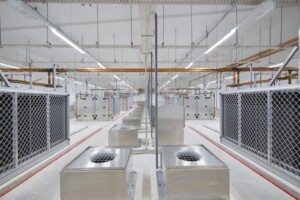
For specifiers, fire engineers and builders: the slab is non-combustible. The finish on top of it may not be. This is particularly key for sensitive building environments such as data centres.
Concrete is about as fire-safe as building materials get. It’s one reason we choose it for warehouses, hospitals, car parks and data centres.
Then the slab gets finished. A sealer to stop dusting, a coating for appearance or cleaning, and perhaps another coat a few years later. Each one is a thin layer, but across thousands of square metres the total adds up.
Few specifications ask what that layer does in a fire.
Where the combustible fuel can come from
Concrete itself doesn’t burn. Many surface finishes, including epoxy, polyurethane and acrylic systems, are organic films. Depending on their formulation and fire classification, they may add combustible material to the space. Every recoat adds a little more.
That doesn’t make every coating a problem. It means the fire classification of the finish is worth checking rather than assuming. Performance varies by product and system, so the correct comparison is the documented classification of the proposed finish in its intended application.
 |
How to check a “non-flammable” claim
BS EN 13501-1 is the European standard for classifying how construction products react to fire, meaning how much they contribute to a fire’s growth. Classes run from A1, the highest (no contribution to fire), down to F. Flooring classifications carry an “fl” suffix.
Reaching A1 involves tests such as:
- ISO 1182 (non-combustibility): does the material burn or add heat in a furnace?
- ISO 1716 (heat of combustion): how much energy could the material release?
So when a product is described as “non-flammable”, ask three things: which class, under which standard, and can you see the test report?
RELATED READING: Is Your Concrete Sealer Adding Fire Load Fuel to Your Data Centre?
The MARKHAM approach
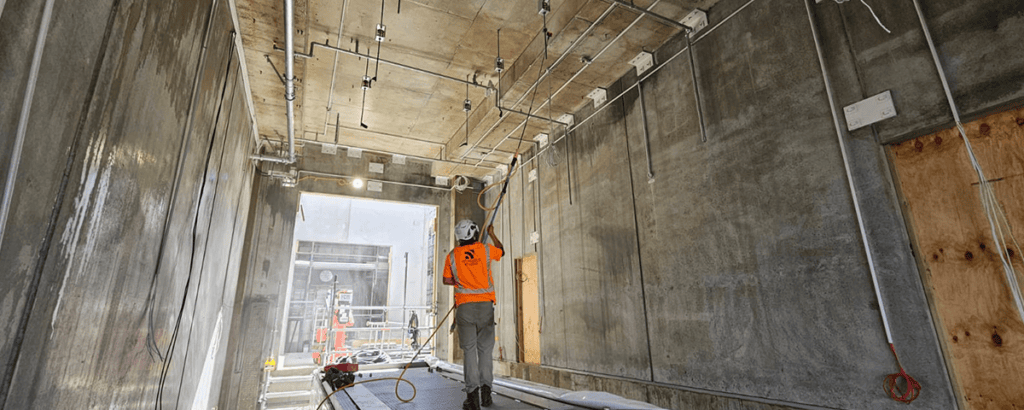
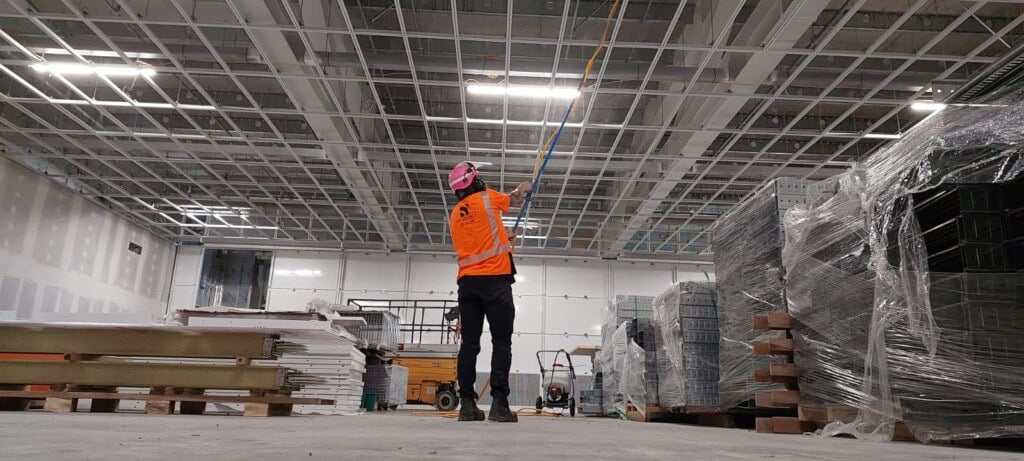
MARKHAM hydrogel treatments penetrate into the concrete rather than forming a film on it. Sprayed on, they react with the water and free compounds already in the slab to create more of concrete’s own binding structure (C-S-H). This reaction helps close concrete porosity, control internal moisture movement and reduce the conditions that permit carbonation-related surface deterioration
CONQOR PROTECT seals, hardens and controls moisture without leaving a surface film. It has been independently tested to BS EN 13501-1:2018 using ISO 1182 and ISO 1716, and classified A1 / A1fl, the highest reaction-to-fire class (classification report 20250428-002614-10C). No flame retardants are used.
Because the treatment does not rely on a topical film, it does not require the conventional recoating cycle associated with many film-forming finishes. This in turn means no extra layers added over the building’s life.
 |
Questions worth asking
? Has the fire engineer counted floor and surface finishes in the fire load?
? What reaction-to-fire class does the proposed sealer or coating carry, and under which standard?
? Can the supplier provide the test report, not just a datasheet claim?
? How often will the finish need recoating, and does each coat add to the fire load?
? Could dust control and protection be built into the concrete instead?
- TO CONSIDER: Fire Risk: A Major Concern for Data Centres
Talk to us before the finish is specified
Specifying floors for warehouses, health facilities, car parks or data centres? Download the CONQOR PROTECT fire classification report, then talk to a MARKHAM specialist about protecting the slab without adding fuel.
If you’re involved in data centre construction, you’ll find our on-demand webinar library useful. For example, try “Unseen Risks: Concrete in Data Centres“.