Highways, Bridges … It’s Costly to Maintain Concrete Infrastructure
If you’re in charge of the care of civil road or bridge infrastructure (or the related repair budget) you’ll be well aware maintenance does not come cheap; to say nothing of the cost of replacements!
There are two real-world factors that come into play here:
1) Maintenance budgets are likely to be inadequate to cover the real costs involved.
2) Service life estimates are rarely achieved without maintenance intervention along the way.
And do you know what? This shouldn’t be the case. Isn’t concrete naturally durable?
Moisture and Deterioration
Did you know that premature deterioration of concrete is almost always caused by moisture-borne contamination?
Reactive substances enter the concrete and move about within it, carried by water and moisture vapour. These include chlorides and other substances that react with concrete or reinforcing steel, setting off a cycle of cracking and deterioration.
Dry vs Moist Conditions
Think about it: structures in extremely dry conditions will tend to last a lot longer. Conversely, structures in moist conditions are under environmental pressures that lead to premature decay.
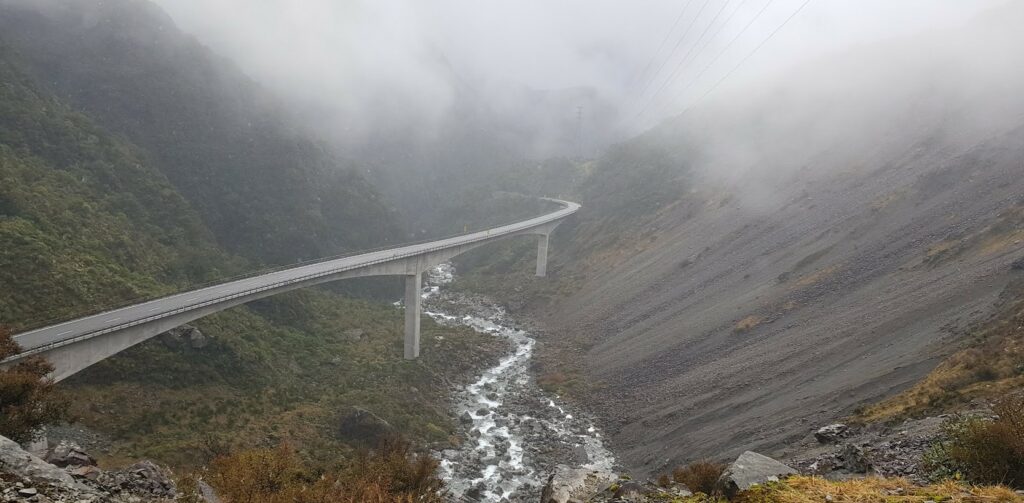
This at once places watercourse bridges, permanently subjected to a high-moisture environment, at particular risk. Roads and highways, with their exposure to weather and traffic stresses, are not far behind.
Prevention, and the Trouble with Cracks
All of this is probably not telling you anything you didn’t already know, really. And of course, a lot of effort is constantly going into research for better mix designs and work practices, which should make concrete structures more durable from the outset.
The tiny problem is, it’s virtually impossible to eliminate micro-cracking during construction – and micro-cracks are gateways for moisture – and moisture carries contamination.
Aged existing concrete?
Further, if the structure you’re caring for has aged and you’re already facing cracking (and/or steel corrosion), you need a cost-effective solution urgently.
You may be thinking of preventing further deterioration with a coating or silane.
You may be planning on cementitious patching or other repairs.
Unfortunately, none of these things will address or arrest the underlying problems.
|
|

Enter – Hydrogel Treatments
MARKHAM concrete hydrogel treatments are water-based, nanoparticle-catalytic silica colloids.
Yes, that’s quite a mouthful, but what do they really do?
Aquron treatments penetrate the porosity of the concrete, utilising the free lime to form a hydrogel within the matrix.
Immobilise the Moisture
Importantly, this hydrogel uses up and immobilises the moisture within the concrete. This has two key effects:
1) Prevents moisture (… and those moisture-borne contaminants …) from entering the concrete.
2) Prevents the movement of moisture within the concrete – arresting the reactivity of the contaminants.
The practical results of this include
- Arresting ASR (alkali silica reactivity)
- Preventing DEF (delayed ettringite formation)
- Arresting corrosion and protecting the reinforcing zone
- Sealing micro-cracks up to 0.5mm

You can see where this is going. Yes, there is a cost-effective treatment for proactive maintenance of your concrete infrastructure.
IF INCLUDED IN NEW CONSTRUCTION – Aquron hydrogel treatments can enhance curing, minimise cracking, and protect the durability of the structure from the outset.
IF USED FOR REMEDIATION – Aquron hydrogel treatments can penetrate deep into the concrete, sealing against further contamination and arresting existing reactivity.
If your damage is extensive (spalling or major cracking) then Aquron alone will not suffice, but can still be beneficial in preventing Incipient Anode Formation around cementitious repairs.
Major Cost Savings Over Time
Proactive concrete maintenance using Aquron hydrogel treatments will significantly reduce major repair costs. Intervene early with hydrogel treatments to save major repair costs over time.
Want to know more? Get in touch!
… and There’s More …
Hey – MARKHAM hydrogel treatments are environmentally friendly too. That’s important when you’re working over waterways, and other sensitive areas. MARKHAM’s EPD certificates are available here.
We have a dedicated page of industry-specific solutions for civil infrastructure.
Here’s a relevant on-demand webinar – grab a coffee and learn more!