For councils and port authorities managing coastal structures, the most cost-effective durability decision is made at the design stage. How can we build long-term protection into marine concrete and keep it there?
Every coastal asset manager knows the pattern
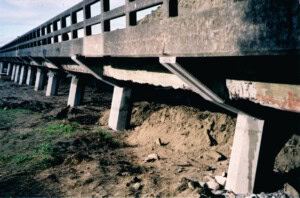
A seawall, jetty, boat ramp or surf club looks sound at handover. Years later, rust staining appears, the cover concrete begins to spall, and an asset designed to last for generations joins the capital works list early.
By the time deterioration is visible, the options are expensive: patch repairs, access restrictions and works programmed around tides and public use. The decisions that most influence how long marine concrete lasts are made much earlier, when the concrete is specified.
Water is the delivery system – isn’t that ironic?
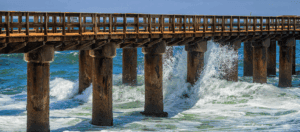
Seawater needs a way in before it can do damage. Chlorides and sulphates travel in moisture, moving through capillary pores and microcracks until they reach the reinforcing steel. Corrosion follows: the steel expands, and the surrounding concrete cracks, letting even more in.
MARKHAM’s approach is to close that pathway inside the concrete, rather than relying on a surface barrier that can wear, peel or be damaged. MARKHAM colloidal silica hydrogel technology reacts with the concrete’s natural alkalinity, converting free moisture in the pores into a stable gel that restricts the movement of water and the contaminants it carries.
The science is set out in a white paper we have recently republished, “Increasing Coastal Concrete Life with Hydrogel Technology,” by Doug Hamlin et al. First presented at Australasian Coasts & Ports, it compares hydrogel-treated concrete with a reference mix in laboratory and coastal conditions, and concludes that the technology can successfully extend the life of maritime structures.
Protection for new and existing concrete
For new structures, we recommend CONQOR B50 waterproofing admixture, dosed at the batching plant, so protection runs through the full depth of every element with no extra trade on site. CONQOR B50 carries an EPD, is nil-VOC, and is sustainably sourced from a geothermal by-product.
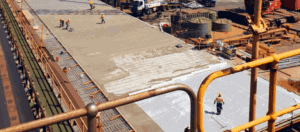
For the most exposed surfaces and existing assets, AQURON 7000 spray-applied hydrogel provides added protection against moisture migration and chloride activity. It can also be applied alongside concrete repairs to help prevent new corrosion from forming around the patch. AQURON 7000 also carries an EPD.
In practice
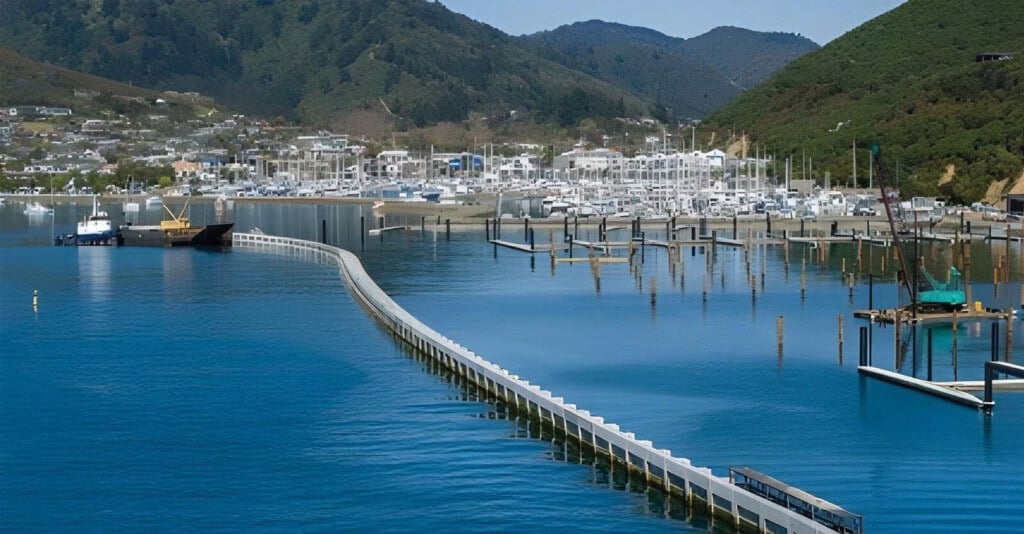
Waikawa Breakwall, Marlborough, NZ.
This 500-metre piled breakwall stands in up to 18 metres of water and is built from 25-tonne precast wave panels. AQURON 300 was specified at the design stage and incorporated into the new concrete, with no delay to the construction programme. Durability and performance have been satisfactory to date.
 |
| Download the Waikawa Breakwall case study to see how the specification was developed. |
Dendy Beach Pavilion, Brighton, Victoria.
Delivered under Bayside City Council approval, the Dendy Beach Pavilion is set partly into the beach dune, with persistent seepage and a high water table. MARKHAM’s multi-part approach waterproofed the structure, backed by spray-applied AQURON 7000 in the most exposed areas. When our team revisited nearly two years later, there was little to no external evidence of deterioration.
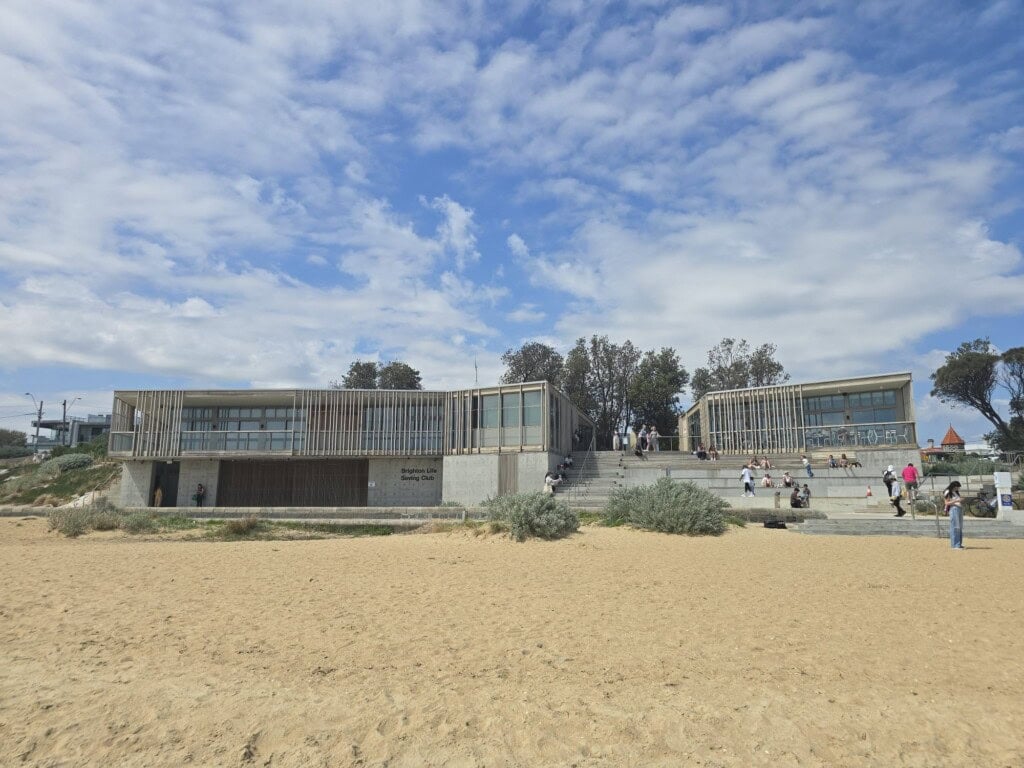 |
| Dendy Beach Pavilion including the Brighton Life Saving Club |
Questions worth asking at the design stage
- Which elements sit in the tidal, splash or spray zones, and are they specified accordingly?
- Is durability built into the concrete, or does it depend on a coating that will need ongoing maintenance?
- Which elements will be the hardest and most costly to reach for future repairs?
- What maintenance interval is the whole-of-life budget assuming, and what would it be worth to extend it?
Talk to us before the specification is locked
If you have a coastal asset in planning, whether a seawall, wharf, boat ramp, surf club or outfall, our technical team will review the exposure conditions, concrete specification and maintenance assumptions with your design team. We will show you where hydrogel protection adds the most service life for the investment.
Request a durability review at the design stage.
Try “The Marine Concrete Experience“, our on-demand webinar on this important topic!