For site managers, project managers, contractors and procurement teams: the cheapest curing line on the quote is rarely the cheapest curing on the project.
The pour goes well. Curing gets ticked off the inspection test plan, and the crew moves on to the next slab.
Months or years later, the bill arrives. Nobody connects it to curing, because nobody saw it coming.
Curing is one of the most specified and least delivered stages of concrete construction. Every common method has a cost. Most of it just doesn’t show up on the quote.
Where the hidden curing costs sit
Doing nothing
Air curing costs nothing on the day. The bill is simply deferred. Concrete that dries out too early has a weaker, more permeable surface, and the steel inside corrodes sooner. That cost lands after handover as defects, repairs and disputes, usually on someone else’s budget.
Air-dried concrete can reach only about half the strength of continuously moist-cured concrete.
- Related topic: Air curing your concrete?
Water curing
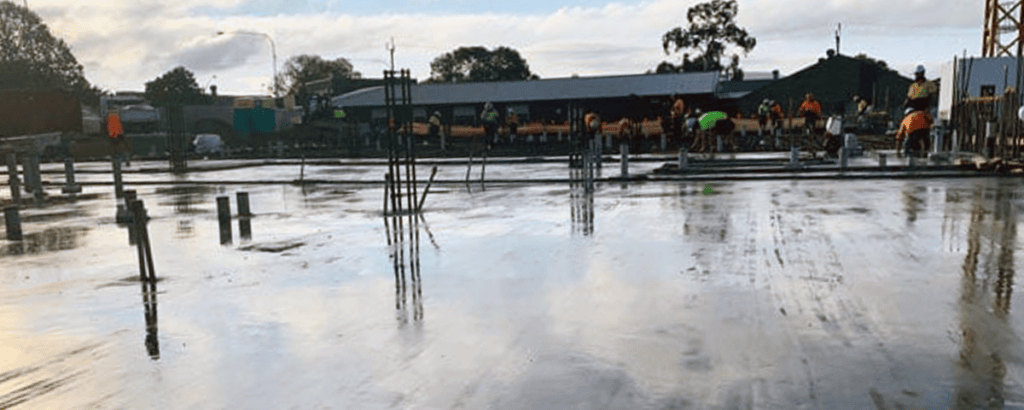
On paper, water curing is the gold standard. On a real site it has to be continuous. That means labour, water, supervision and protection, sometimes for a week or more. If it lapses over a weekend, the benefit drops sharply. Because the cost is spread across the programme, it never appears as one line anyone can see.
 |
Membrane curing
Membranes are quick to apply, which is why they’re popular. The catch comes later. Residue can interfere with coatings, adhesives and floor coverings, and removing it adds grinding or cleaning time. That can mean paying twice: once to apply it, and once to take it off.
Why it matters more now
Lower-carbon mixes with more supplementary cementitious materials are more sensitive to poor curing. As mixes change to meet carbon targets, the gap between specified and delivered curing gets more expensive.
For procurement, the lesson is simple. Comparing curing on rate per square metre misses most of the cost. The real comparison is total cost: labour, water, programme time, removal, rework and service life.
A different way to cure
MARKHAM’s colloidal silica hydrogel technology cures concrete from within, rather than relying on water kept on the surface or a film sitting on top.
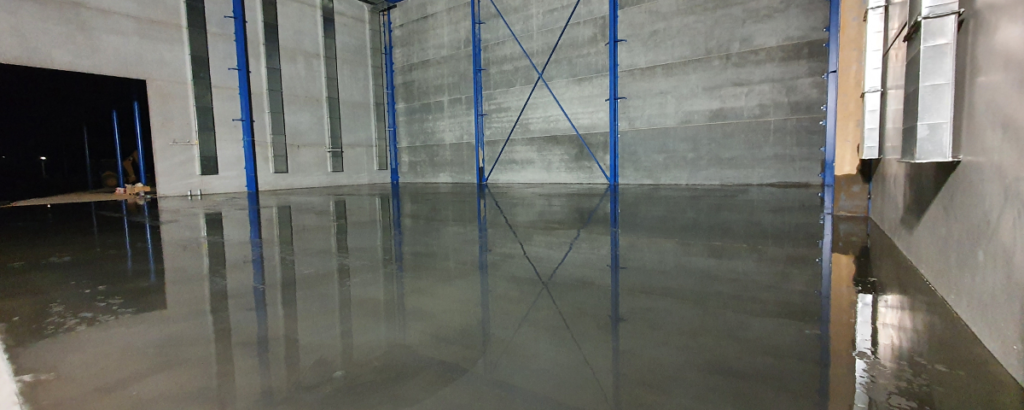
CONQOR CURE is a spray-applied curing treatment that goes on once, with no continuous wetting to manage. Independent testing showed curing performance equivalent to water curing and AS 3799 membrane curing systems.
- Further reading: What is colloidal silica?
 |
Questions worth asking before the next pour
- Which curing method is specified, and who on site is responsible for delivering it?
- What will it cost to keep water curing continuous for the full period, weekends included?
- Will a membrane need to come off before finishes go down, and who pays for that?
- Is the mix more curing-sensitive than the one the specification was written for?
- How will curing be verified, not just ticked off?
Talk to us before the curing method is locked in
Planning a significant concrete pour? Review the curing approach before placement. Talk to a MARKHAM curing specialist about curing requirements, project conditions and supporting performance evidence.
| What Is Your Concrete Curing Method Really Costing You?
Live on Wednesday 4 November with Doug Hamlin and Charles Currie. |