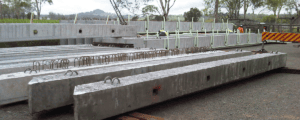
Marine concrete structures are at an extremely high risk of steel reinforcement corrosion
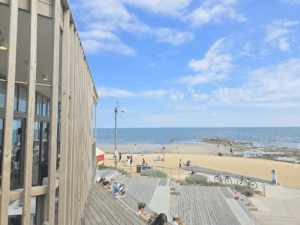
In Australasia, a high proportion of the population lives close to the coastline. And a large number of concrete structures exist in that same zone.
The closer to the coast, the higher the ambient humidity and the greater the risk of corrosion to the concrete’s reinforcing steel – and the resulting concrete decay.
(Did you just stop reading because you live inland? Bridges over regularly flowing rivers and creeks are also at risk!)
When saltwater is involved – including tidal rivers – the risks escalate due to the high chloride content of that water.
 |
The common factor is the moisture level.
Moisture and moisture vapour carry contaminants into the concrete’s porosity. Microcracking, due to ASR or other factors, encourages this process.
When contaminants, particularly chlorides, reach the rebar zone, accompanied by moisture, the steel is at high risk of corrosion.
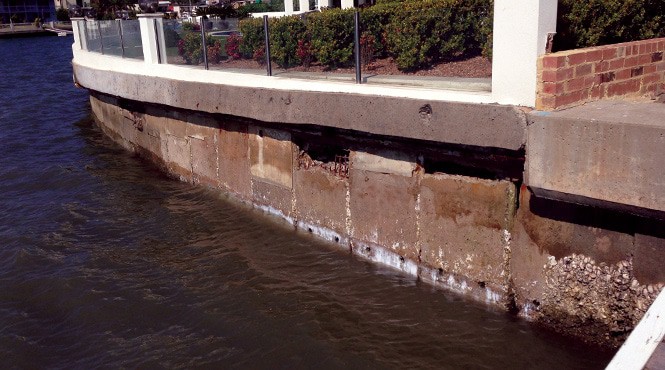
This process of concrete decay is gradual and can manifest as major cracking, corrosion stains, or spalling.
The question is, can the process be arrested?
Like most decay processes, the earlier it is treated, the better the outcomes. Major degradation may require engineered repairs, including possible replacement of the steel, with associated costs and downtime.
Ideally, the concrete’s porosity and microcracking should be sealed at the earliest possible stage – even while under construction, but definitely at the first appearance of microcracking.
MARKHAM offers an advanced penetrating hydrogel treatment, which has proved its worth throughout Australasia in protecting concrete and slowing the aging process.
The hydrogel seals the porosity, and cracks up to 0.5 mm in width, and penetrates to a depth of up to 150mm. Moisture content, moisture vapour, and moisture-borne contaminants are immobilised. The risk of reactivity is significantly reduced.
MARKHAM’s hydrogel treatments can be applied to both new and existing concrete.
If you have the care of a concrete marine structure, we’re keen to talk to you about its preservation and proactive maintenance.
If you manage concrete infrastructure, take a little time to watch our on-demand webinar, “The Marine Concrete Experience“.