“Nothing” might be concrete’s worst enemy!
Concrete is the most widely used construction material in the world, with over 6 billion tonnes produced globally each year!
Which is more important: short-term construction cost or long-term durability? That’s a very common dilemma in the construction industry, and concrete is a classic example. ‘Cutting corners’ may meet the immediate requirements of the contractor and the client, but may compromise the service life of some parts of the finished building.
Protecting exposed floor slabs
One example of this is concrete floors that will be subject to vehicular traffic. It is surprisingly common to leave this concrete unsealed, to save money or time. Even where a sealer has been called for by the designer, it may be cut back towards the end of the project when the contractor is looking for ways to save costs.
This may appear reasonable if the sealer is seen as only a decorative finish. Generally, these are only surface treatments and often wear off with traffic.
In fact, concrete floor sealer plays an important part in helping preserve the long-term service life of the floor by alleviating wear and dusting caused by traffic.
Exposed concrete surfaces have a tough time
The obvious challenges to concrete durability would be wear and contamination. A bare concrete floor will degrade over time due to vehicle and foot traffic and contaminant spills. Areas not subject to direct wear may still be exposed to weathering or environmental contamination, depending on the circumstances.
A less obvious challenge is moisture-borne contamination. Contaminants in the air, such as car exhaust fumes, can be carried into concrete by moisture vapour. Reactive chemicals can enter the concrete, triggering a cycle of concrete breakdown and rebar corrosion.
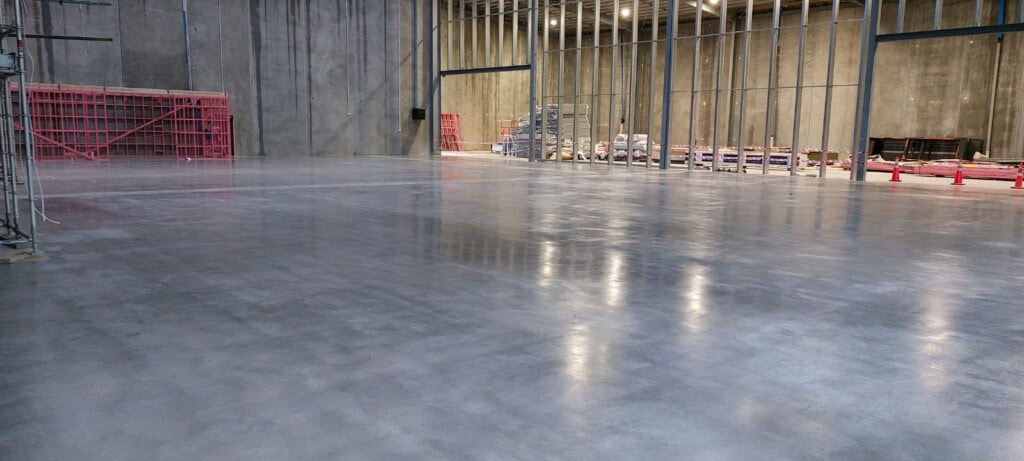
Concrete needs protection
That’s the bottom line.
 |
Cost-effective solutions?
Let’s talk about hydrogel treatments. Spray-applied AQURON 1000, for example, can replace…
- Curing compound (or the water curing process and its associated labour costs)
- Dust-proofer
- Surface Hardener
- Concrete sealer
Yes, one treatment can replace up to four products! This makes it an extremely cost-effective solution!
We’d like to discuss cost-effective concrete protection options for your project. Get in touch today!
Try our on-demand webinar, “Warehouse Floors & Naked Concrete“.